Where the coast meets the science of navigation.
An independent editorial journal exploring the historical development of lighthouse architecture, beacon technology, maritime signalling, and the principles of coastal navigation.
Beacon Index
Lighthouse Architecture
Explore the evolution of tower design, lantern rooms, structural foundations, and the historical methods used in coastal construction.
Explore Architecture →
Beacon Technology
Examine the development of lighthouse illumination, from early coal fires to vaporised oil burners and modern optical signalling systems.
Explore Beacon Technology →
Coastal Navigation
Understand how visual signals, lateral markers, daymarks, and leading lights historically provided structure to coastal maritime routes.
Read Navigation Guide →
Fresnel Lenses
Discover the physical principles behind Augustin-Jean Fresnel's invention, which revolutionised the efficiency of maritime light projection.
Explore Fresnel Lenses →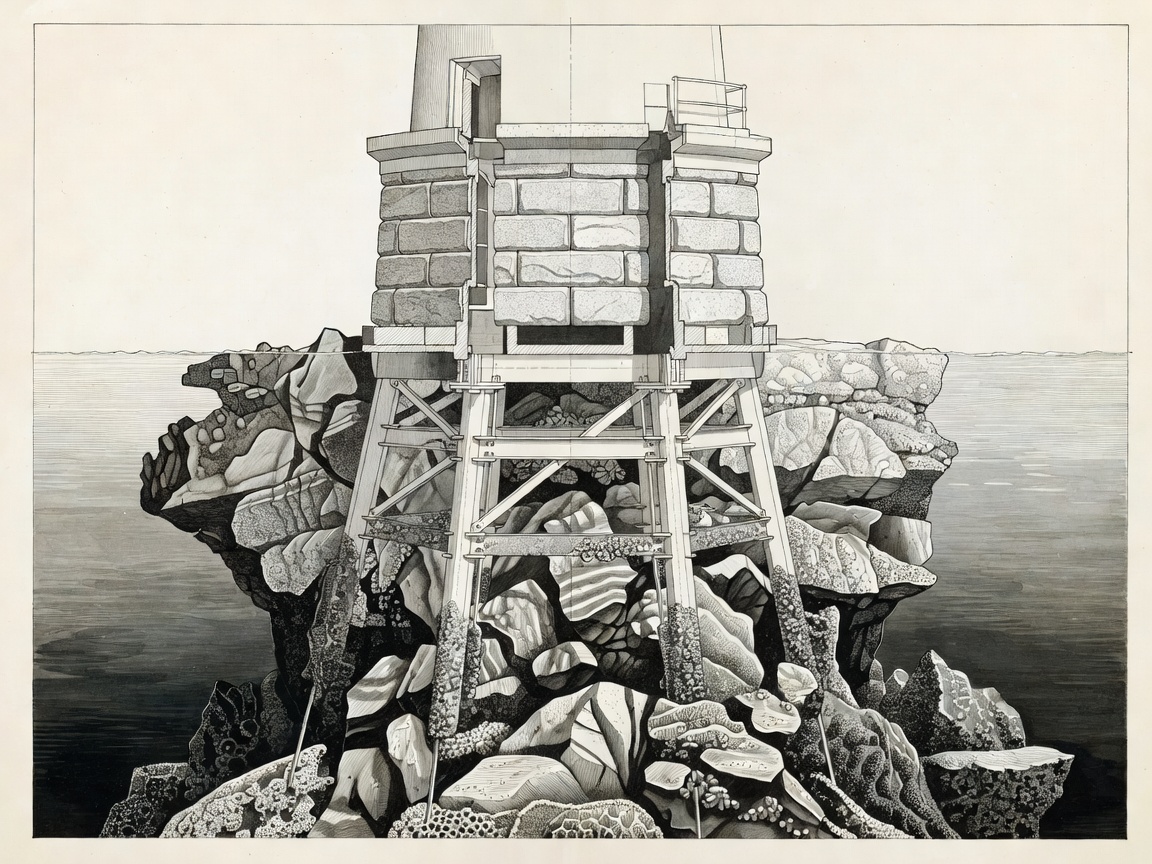
Lighthouse Engineering
Review the civil engineering challenges of building enduring structures in highly corrosive and wave-battered marine environments.
Read Engineering Notes →
Keeper History
Explore the historical operational routines, maintenance responsibilities, and isolated conditions experienced by principal and assistant keepers.
Open Keeper Archive →How a Lighthouse Works
Click the markers on the diagram to explore the primary structural and optical components of a traditional coastal beacon.
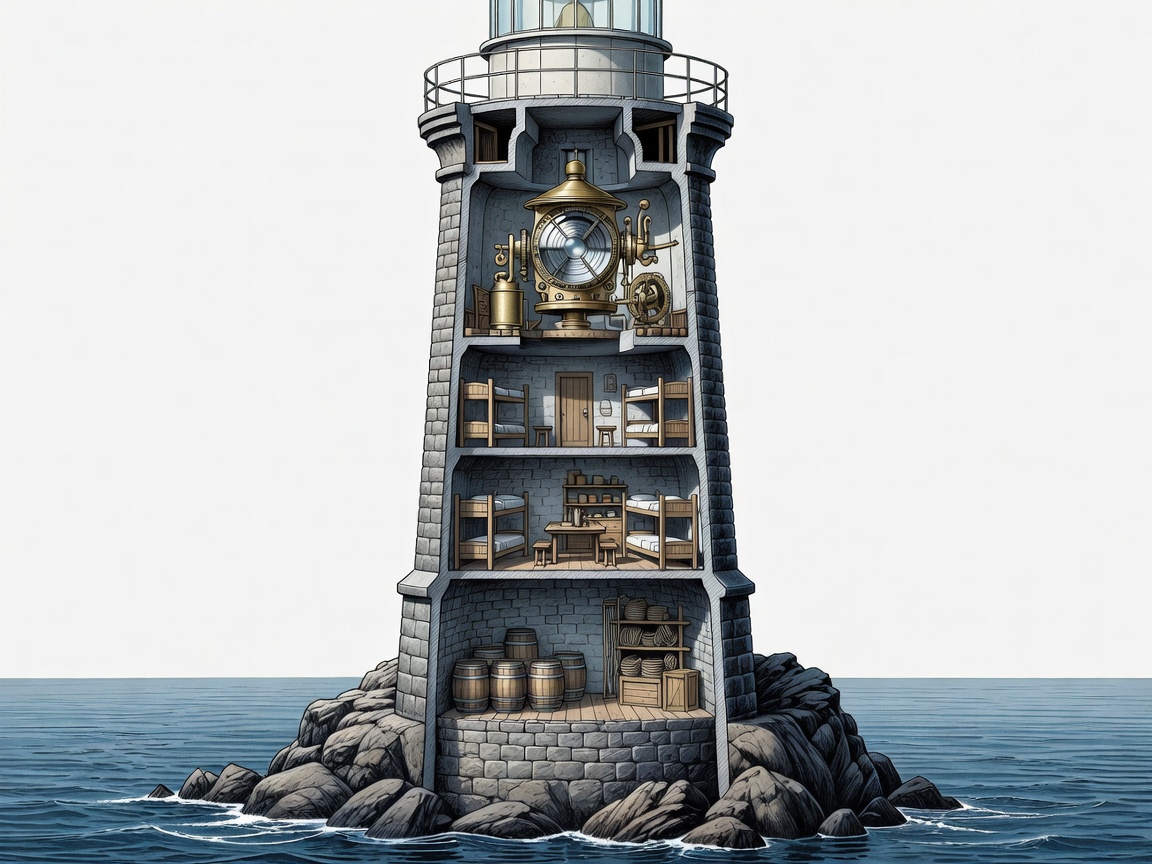
Lantern Room
The protective glass and metal enclosure at the top of the tower. It shields the delicate optical equipment from wind, salt spray, and extreme weather, while featuring a ventilation system to remove fumes from historical combustion lamps.
Optical System
Historically dominated by the Fresnel lens, this apparatus uses concentric glass prisms to capture scattered light from the central lamp and focus it into a powerful, concentrated horizontal beam visible for miles.
Gallery Deck
The exterior walkway surrounding the lantern room. It allowed keepers to clean the storm panes (outer glass) safely and provided a vantage point for observing maritime traffic and weather conditions.
Tower Shaft
The main vertical structure, designed with a specific geometric profile (often a hyperbolic curve in wave-swept locations) to direct the force of breaking waves upwards rather than absorbing the full impact.
Foundation
The most critical engineering component. On exposed rocks, foundations were often constructed using complex interlocking masonry techniques, anchoring the first courses of stone directly into the bedrock.
Understanding Maritime Charts
Nautical charts are the fundamental reference for coastal navigation. They map depths, coastal features, hazards, and the precise locations and light characteristics of navigation markers.
Our archive examines the historical development of hydrographic surveying and the standardised symbols used to denote visual and auditory signals.
View the Diagram →